
Cat scratching is a normal, instinct-driven behavior that helps cats stretch their bodies, maintain claw health, and communicate through scent and visual marks. While cat scratches can feel frustrating when they show up on furniture, they reflect a natural need rather than bad behavior. Understanding why scratching happens allows pet owners to address the root cause instead of reacting to the damage. When expectations align with feline instincts, homes stay calmer and cats feel more secure. This balance supports both the household environment and the human–animal bond. With the right approach, scratching can shift away from furniture and toward appropriate outlets.
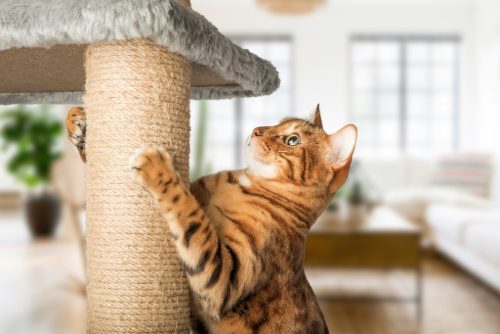
Why Do Cats Scratch? Understanding the Instinct
Scratching serves several important purposes in a cat’s daily routine, and none of them involve spite or misbehavior. Cats scratch to stretch their muscles, particularly through the shoulders, back, and legs, which helps maintain flexibility and strength. The action also removes worn layers from the claws, keeping them functional and comfortable. From a communication standpoint, scratching leaves behind visual marks and scent signals from glands in the paws. These signals help cats define their territory and feel more confident within their environment. A cat scratch therefore reflects physical maintenance and emotional security working together.
Scratching also plays a role in stress regulation. When a cat feels uncertain or overstimulated, scratching offers a familiar, grounding activity that releases tension. Changes in the household, such as new pets, guests, or schedule shifts, can increase scratching frequency. Even indoor cats retain this instinct, since it is deeply rooted in feline behavior. Recognizing scratching as communication helps reframe it from a problem to a message. That shift opens the door to better solutions that meet a cat’s needs without sacrificing furniture.
Scratching as Communication and Comfort
Cats rely on nonverbal signals to navigate their world, and scratching sits high on that list. The scent markers left behind are subtle to people but meaningful to cats. These cues help create a sense of ownership and safety within shared spaces. Scratching also releases endorphins, which contribute to calm behavior afterward. When cats lack appropriate outlets, they often choose furniture because it is sturdy, textured, and located in social areas. Addressing those factors reduces unwanted scratching patterns.
Protecting Your Furniture from Kitty’s Claws
Protecting furniture starts with understanding why certain items attract scratching in the first place. Upholstered couches, wooden chair legs, and area rugs often provide resistance and texture that cats prefer. These items also tend to sit in high-traffic areas, making them ideal for scent marking. Instead of focusing only on prevention, it helps to make furniture less appealing while offering better alternatives nearby. This dual approach supports learning without creating stress.
Physical barriers can reduce damage while new habits develop. Furniture covers, protective panels, and strategically placed deterrents limit access without punishment. Placement matters just as much as materials. Cats often return to the same spots out of habit, so consistent protection helps interrupt the cycle. Over time, attention shifts toward approved scratching surfaces. This process requires patience, but it supports lasting change.
The Importance of Providing Scratching Posts
Scratching posts meet a cat’s instinctive needs while protecting household items. The most effective posts match the height, stability, and texture that cats naturally seek. Vertical posts allow for full-body stretching, while horizontal options support cats who prefer ground-level scratching. Material choice also matters, with sisal, cardboard, and textured fabric often ranking high. Offering variety increases the chance that a cat will use the post instead of furniture.
Placement plays a major role in success. Scratching posts work best when positioned near favorite furniture or sleeping areas. Cats often scratch after waking or during moments of excitement, so easy access encourages use. A post tucked away in a quiet corner may go unnoticed. When scratching options feel convenient and satisfying, cats choose them more often.
Choosing the Right Scratching Surface
Not all cats prefer the same textures or positions, so observation matters. Some cats gravitate toward tall posts they can fully extend against. Others favor low, flat surfaces that allow for digging motions. Offering more than one style helps identify preferences without guesswork. Rotating or refreshing scratching materials keeps them engaging over time.
The Dangers and Ethics of Declawing
Declawing is a surgical procedure that removes the last bone of each toe, and it carries significant physical and behavioral risks. Many veterinary professionals oppose declawing due to its long-term impact on mobility and comfort. The procedure can lead to chronic pain, changes in gait, and increased stress-related behaviors. Scratching serves as a natural outlet, and removing that ability disrupts normal feline behavior. Ethical considerations center on quality of life rather than convenience.
Behaviorally, cats who undergo declawing may show increased anxiety or avoidance behaviors. Some develop litter box issues or become more reactive because they lose a primary form of communication and defense. Modern veterinary care emphasizes education and environmental management instead of surgical intervention. Understanding these risks helps pet owners make informed decisions that prioritize long-term wellbeing.
How to Redirect Your Cat’s Scratching Behavior
Redirection focuses on guiding a cat toward appropriate scratching surfaces instead of trying to stop the behavior altogether. This approach respects instinct while shaping habits over time. Consistency plays a key role, since cats learn through repetition and routine. Introducing scratching posts near previously targeted furniture helps bridge the transition. Gradually, the preferred scratching location changes.
Positive reinforcement strengthens new behaviors. When a cat uses a scratching post, attention and encouragement reinforce that choice. Over time, the post becomes part of the daily routine. Redirection avoids fear-based responses and supports trust between cats and their households. This method aligns with modern behavior-focused care.
Tools to Help Manage Your Cat’s Claws
Several tools support claw maintenance and furniture protection when used thoughtfully. Regular nail trims reduce the damage caused by a cat scratch without interfering with natural behavior. Nail caps offer another option by covering the claw tips temporarily. These tools work best when paired with scratching posts and environmental management. They support balance rather than restriction.
It is important to approach these tools with guidance from veterinary professionals. Proper use prevents stress and supports comfort. When combined with environmental enrichment, claw management tools reduce frustration on both sides. They serve as part of a broader plan rather than a standalone fix.
When to Talk to a Vet About Excessive Scratching
While scratching is normal, sudden changes in frequency or intensity may signal underlying concerns. Stress, environmental changes, or discomfort can all influence behavior. If scratching becomes destructive despite appropriate outlets, it may be time for a professional conversation. Veterinary teams can help evaluate behavioral patterns and rule out contributing factors.
The team at Northwoods Veterinary Clinic works with pet owners to understand behavior changes in context. Guidance focuses on observation, environment, and overall wellbeing. Early conversations often prevent frustration and support healthier routines. If scratching feels overwhelming, support is available.
From Claws to Calm: Creating a Scratch-Friendly Home
Living with a cat means accepting scratching as part of feline life while shaping where it happens. When homes provide appropriate outlets, scratching becomes less of a conflict and more of a routine behavior. Understanding the purpose behind a cat scratch allows for practical solutions that respect instinct and household needs. Furniture protection, thoughtful placement of scratching posts, and open communication with veterinary professionals all contribute to success.
If scratching concerns persist or feel difficult to manage, the team at Northwoods Veterinary Clinic is ready to help. Call us at (843) 553-0441 or schedule an appointment online to talk through your cat’s behavior and next steps.